Introduction to Nonprofit Insurance in 2025
Nonprofits today are operating in an environment that is more complex, more regulated, and more financially uncertain than ever before. Funding is fluctuating, operational demands are increasing, and donor expectations are shifting. At the same time, nonprofit organizations are facing higher liability exposures – from volunteer injuries to cyber incidents to event-related losses.
As a result, nonprofit insurance is no longer an afterthought or a simple administrative box to check. It is a critical component of organizational stability and risk management. Nonprofit leaders in 2025 must balance financial constraints with the need for comprehensive protection. This blog explores the challenges nonprofits face and the coverage strategies that help keep organizations protected, compliant, and resilient.
What Is Nonprofit Insurance?
Brief Overview
Nonprofit insurance is a customized set of policies designed to address the risks unique to tax-exempt organizations. Unlike traditional commercial operations, nonprofits must protect staff, volunteers, program participants, donors, board members, and the community.
Effective nonprofit insurance typically includes General Liability, Property, Auto, Workers’ Compensation, Directors & Officers (D&O), Abuse and Molestation coverage, Professional Liability, and Cyber Liability.
Importance of Nonprofit Insurance in 2025
In 2025, the importance of nonprofit insurance continues to rise due to:
- Increased data privacy regulations
- Greater legal scrutiny for boards of directors
- Higher expectations for volunteer management
- More community events and public interactions
- Rising costs of medical treatment and legal defense
Insurance provides not only financial protection but also organizational credibility, helping nonprofits meet grant requirements, satisfy contracts, and reassure donors.

Why Nonprofit Insurance Matters for Executive Directors
Benefits of Strong Insurance & Risk Management
Executive directors who understand their insurance structure gain meaningful advantages:
- Greater funding stability by protecting income-generating programs and meeting grant compliance requirements.
- Improved board confidence, which strengthens governance and decision-making.
- Better volunteer and participant safety, reducing disruptions to mission-critical operations.
- Lower long-term costs through proactive risk practices that prevent claims.
- Protection from personal liability, especially through D&O coverage.
Impact on Operational Trends in 2025
Industry trends shaping nonprofit risk include:
- Higher reliance on technology and digital fundraising, increasing cyber exposure.
- Growth in volunteer-led programs, raising liability considerations.
- More hybrid work environments, affecting Workers’ Compensation and employment practices.
- Increased demand for community-facing events, heightening general liability and property exposures.
- Greater scrutiny from regulators and donors on risk management and compliance.
Key Components of Nonprofit Insurance in 2025
1. Funding Volatility and Insurance Requirements
With donations and grants fluctuating, many nonprofits are operating with limited reserves. This makes major claims harder to absorb, and it also means coverage gaps can have catastrophic financial consequences.
Nonprofits must ensure that insurance policies comply with grantor, landlord, and contractual requirements. Missing endorsements – such as additional insureds, waivers of subrogation, or proper limits – can jeopardize funding and partnership opportunities.
How to Address It
- Complete annual insurance reviews.
- Ensure contracts are reviewed before signing.
- Maintain adequate limits even during budget cuts.
- Prioritize policies that protect mission-critical assets.
2. Volunteer Liability & Coverage Gaps
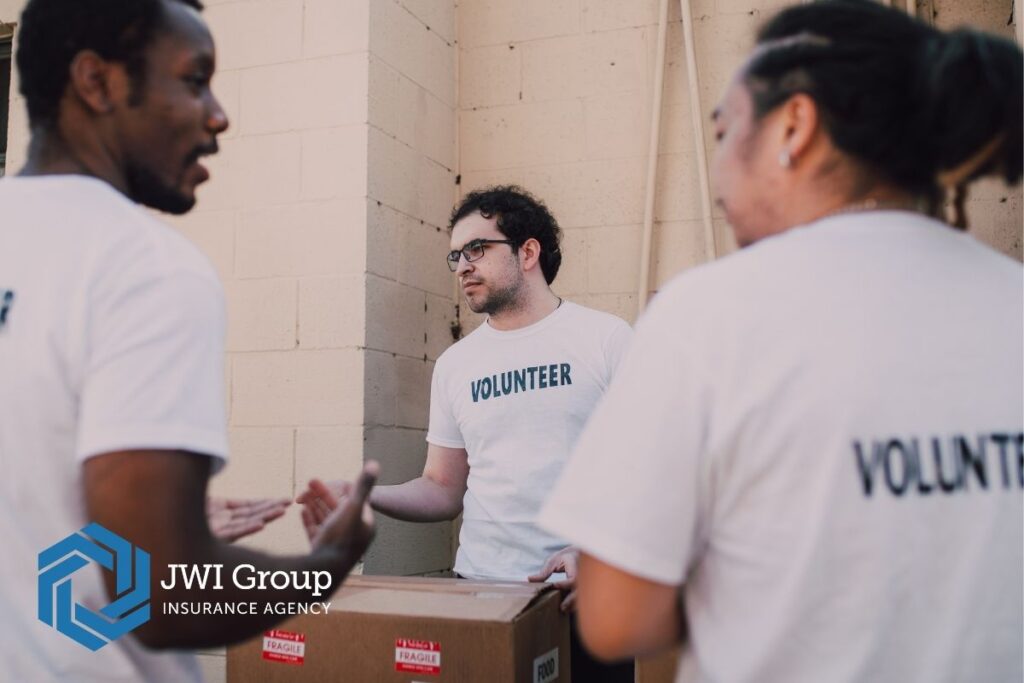
Volunteers are essential to nonprofit operations, but they create unique risk exposures. Injuries to volunteers often fall outside standard Workers’ Compensation, and their actions can create liability for the organization.
Common Issues
- Volunteer bodily injury not covered
- Lack of screening or background checks
- Inadequate training or supervision
- Auto liability gaps when volunteers use personal vehicles
How to Address It
- Add Volunteer Accident and Volunteer Liability coverage.
- Implement background checks and training protocols.
- Require MVR checks for driving volunteers.
- Establish a volunteer handbook with documented policies.
3. Event Liability: Fundraisers, Auctions, and Community Programs
Events – whether galas, walks, auctions, or community outreach – are a core part of nonprofit engagement. But they also introduce high liability exposure.
Potential Risks
- Slip and fall injuries
- Liquor liability concerns
- Property damage to rented venues
- Foodborne illness
- Crowd management issues
How to Address It
- Require Special Event Liability policies when needed.
- Add Liquor Liability if alcohol is served.
- Establish vendor/COI requirements.
- Conduct pre- and post-event site inspections.
- Document emergency and incident procedures.

4. Data Privacy and Cyber Exposure
Nonprofits handle sensitive donor, volunteer, and participant data. Many also process online donations and use cloud-based systems. This makes them a growing target for cyber criminals.
Common Nonprofit Cyber Risks
- Phishing and business email compromise
- Ransomware
- Online donation fraud
- Unauthorized access to donor databases
- Privacy law violations
How to Address It
- Purchase Cyber Liability insurance with social engineering coverage.
- Require multi-factor authentication (MFA) and regular backups.
- Train staff and volunteers on phishing awareness.
- Audit vendor and technology relationships.
- Document a cyber response plan.
5. Aligning Core Coverages: The Standard Nonprofit Insurance Portfolio
A strong nonprofit insurance program does more than check boxes. It aligns operational needs with the right protections so the organization can continue its mission – even during interruptions.
Core Policies Nonprofits Need
General Liability (GL)
Protects against bodily injury and property damage claims arising from operations, programs, and events.
Property Insurance
Covers buildings, office space, equipment, supplies, signs, and business interruption losses.
Commercial Auto
Required if the organization owns vehicles; protects when staff or volunteers use personal vehicles for nonprofit business.
Workers’ Compensation
Mandatory for employees. Covers medical expenses and lost wages.
Directors & Officers (D&O)
Key protection for board members and officers from personal liability related to governance decisions.
Abuse & Molestation Coverage
Critical for organizations working with children, elderly, or vulnerable populations.
Cyber Liability
Protects against cybercrime, data breaches, social engineering, and online fraud.

Preparing Your Nonprofit for 2025 and Beyond
Nonprofit leaders should take the following steps to build a resilient insurance and risk management program:
- Conduct a full risk assessment annually.
- Review bylaws, contracts, and vendor agreements for insurance implications.
- Maintain updated training for employees and volunteers.
- Document procedures across operations, finance, and HR.
- Review HR practices for EPLI considerations.
- Update technology systems and cybersecurity controls.
- Partner with an advisor who understands nonprofit complexity and carrier requirements.
Conclusion
Running a nonprofit in 2025 requires balancing mission, people, donors, and financial responsibility. A well-structured insurance program is a powerful stabilizing force that protects your organization, strengthens donor confidence, and safeguards the community you serve.
JWI Group supports nonprofits throughout New York, New Jersey, and Connecticut with tailored insurance programs and proactive risk management guidance. Our goal is to ensure your organization can focus on what matters most – your mission – while we help you stay properly protected.
Ready for a nonprofit insurance review? Visit https://www.jwigroup.com/ to request a consultation.
Frequently Asked Questions: Nonprofit Insurance in 2025
Q1: What are the biggest insurance challenges nonprofits face in 2025?
Funding instability, volunteer-related liability, event exposures, tightening cyber regulations, and increased scrutiny on boards are driving the greatest challenges.
Q2: Do volunteers fall under Workers’ Compensation?
Not typically. Volunteers often require separate Volunteer Accident or Volunteer Liability coverage.
Q3: Can nonprofits be liable for actions of volunteers?
Yes. If a volunteer harms someone or damages property while acting on behalf of the organization, the nonprofit can be held responsible.
Q4: Why is D&O insurance essential for nonprofits?
Board members and officers can be personally named in lawsuits related to governance, mismanagement of funds, hiring decisions, and compliance issues.
Q5: What cyber risks affect nonprofits the most?
Phishing, ransomware, donor database breaches, and fraudulent online transactions are the top risks.
Q6: Are special event policies required for nonprofit fundraisers?
Often yes – especially when alcohol is served, third-party vendors are involved, or the venue requires proof of coverage.